Last updated November 25, 2026
Prefab or Site-Built ADU in Redmond: How to Choose
Most homeowners researching an ADU in Redmond start with the wrong question. They compare base prices, watch a few factory-tour videos, and assume a prefab unit is the cheaper, simpler option. In our experience the decision hinges on something far more physical: whether a crane or flatbed can actually reach your rear yard without crossing a utility easement, a neighbor’s fence line, or the root zone of a mature Douglas fir. A lot that passes that test opens up the prefab path with brands like Abodu, Cover, and Dvele. A lot that fails it doesn’t, no matter what the brochure says. This guide walks through what prefab really includes, where site-built still wins, and how to read your own property before you commit a dollar.
Quick Answer
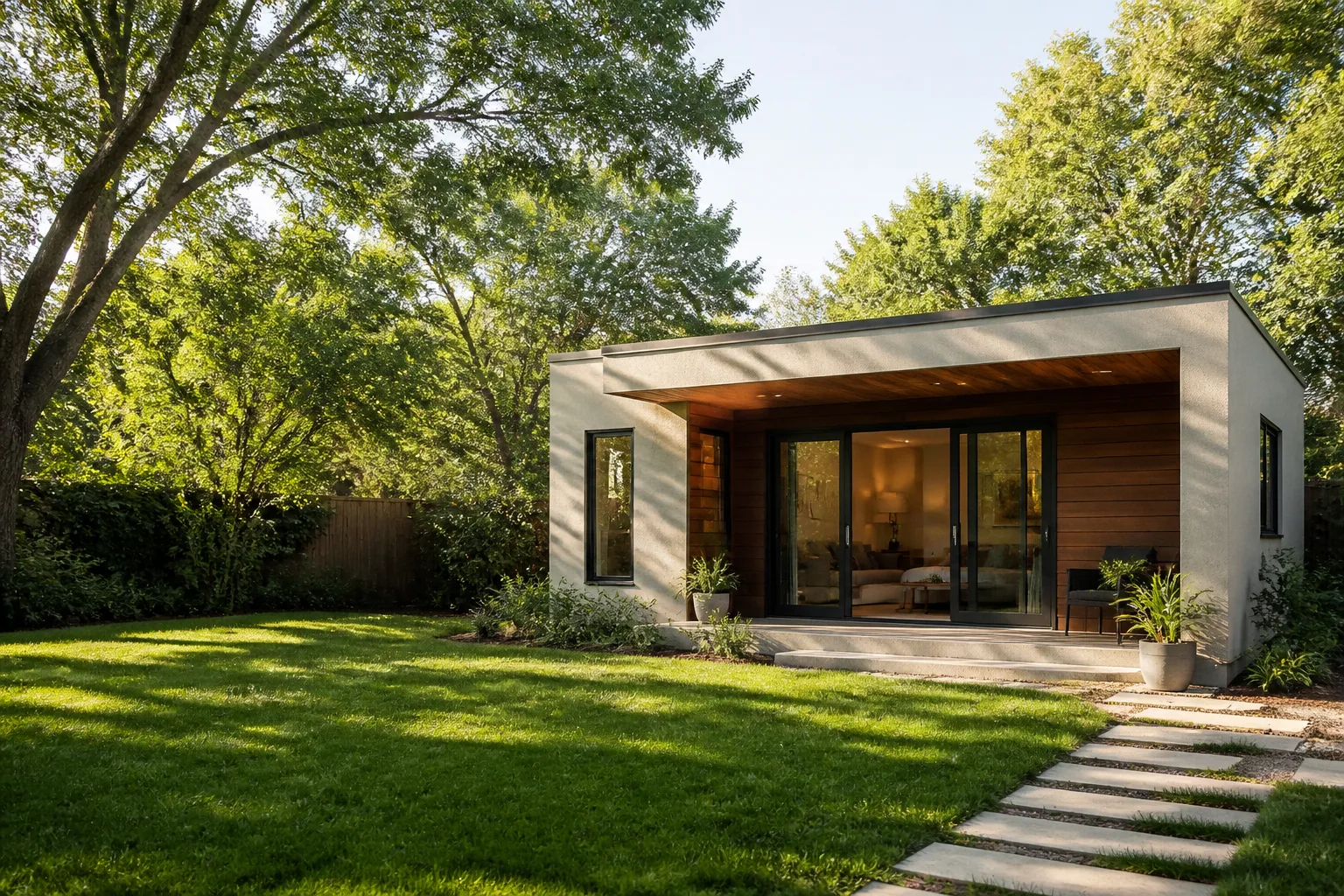
For most Redmond lots with a clear delivery path and manageable slope, a prefab ADU from a brand like Abodu, Cover, or Dvele delivers a finished, permitted unit faster and with more predictable pricing than site-built. Site-built remains the better choice when your lot has tight access, unusual topography, strict finish requirements, or complex integration with the existing house. The right answer depends on your site conditions first and your budget second, not the other way around.
Table of Contents
- Why Site Access Decides the Prefab Question First
- How Abodu, Cover, and Dvele Differ in Redmond
- What “All-In” Pricing Actually Includes (and Excludes)
- Timeline Comparison: Factory Lead Time vs. Site-Built Construction
- What Prefab Doesn’t Solve: Site Work, Utilities, and Foundation
- Where Site-Built Still Has a Real Advantage
- Prefab Site Feasibility Checklist for Redmond Properties
- Garage Conversions and JADUs as Entry Points
Why Site Access Decides the Prefab Question First
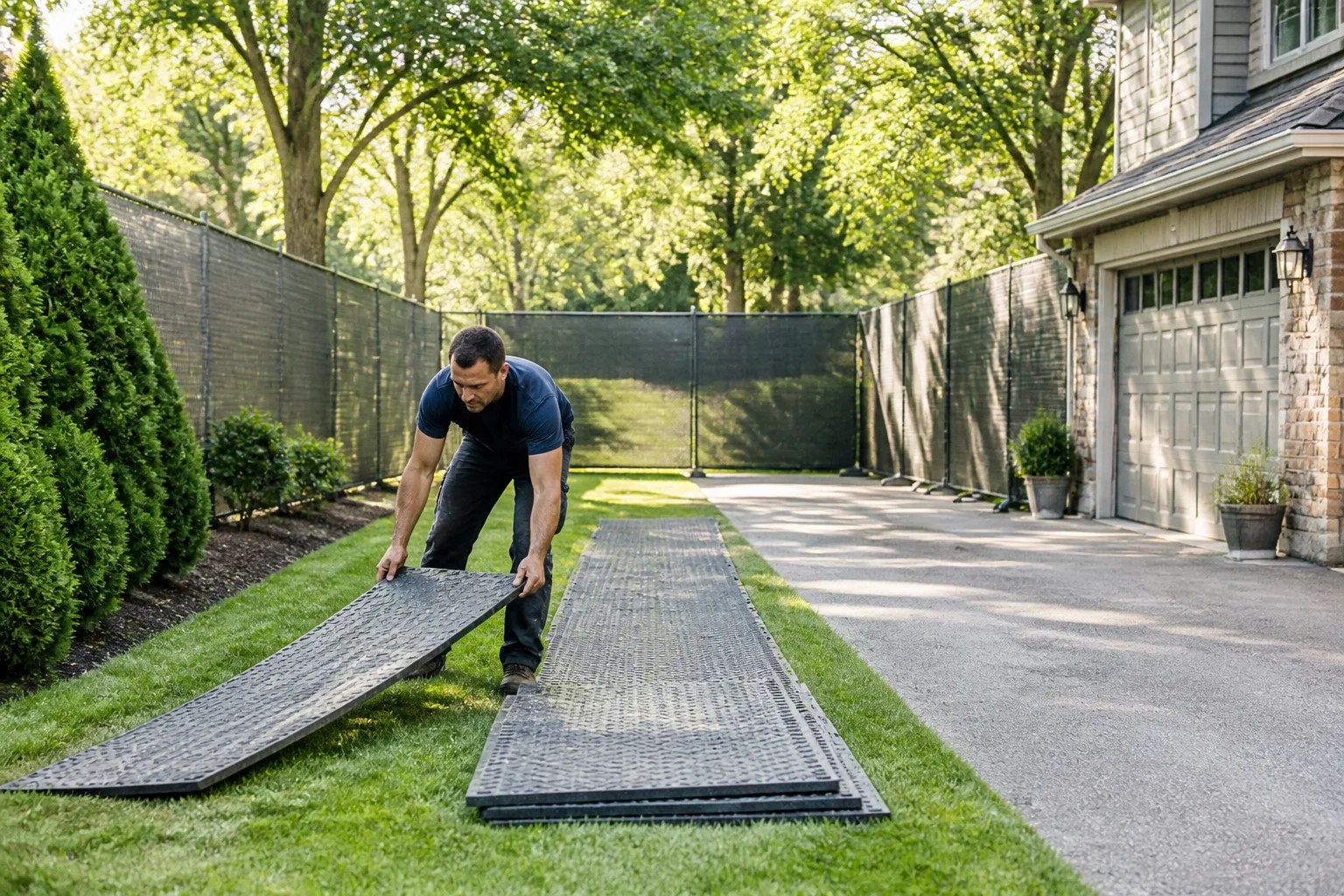
A prefab ADU arrives as modules or panels that must be lifted into place, usually by crane, sometimes by a flatbed with a built-in boom. Where the unit lands, the truck has to be able to park and the crane has to be able to set up with enough clearance to swing the load. In Redmond that calculation is more complicated than it looks. Many of the city’s established neighborhoods have narrow rear access, mature conifers whose root protection zones extend well past the dripline, and overhead utility lines that cross the only viable delivery corridor.
The questions we ask before recommending any prefab brand are these:
- Can a crane truck park within reach of the placement site? Rear-yard placement often requires either a long boom or a street permit to close a lane.
- Is there overhead utility clearance? Power, cable, and telecom lines that run along the property line can rule out a crane lift entirely, even when everything else looks fine.
- Does the delivery path cross a utility easement? Easements exist to keep the utility accessible; cranes and heavy loads can’t legally sit on them without coordination.
- Will mature trees be damaged? Redmond’s tree canopy is one of the things that makes the city worth living in, and the removal or disturbance rules vary by lot. The city’s planning department confirms what applies to yours.
- Is the slope within the brand’s tolerance? Each prefab manufacturer specifies a maximum grade for its foundation system, and a lot that works for one may not work for another.
When the answer to these questions is yes across the board, prefab becomes a genuinely strong option. When it isn’t, a site-built unit framed on location often costs less in total than the workarounds required to force a prefab delivery. If you’re not sure which side of the line you’re on, our ADU Builder Redmond team does a free site review that walks the delivery path with you and flags the obstructions before you pick a brand.
How Abodu, Cover, and Dvele Differ in Redmond
Prefab is not one product. The three brands we work with most often take meaningfully different approaches, and the differences matter on a Redmond lot.
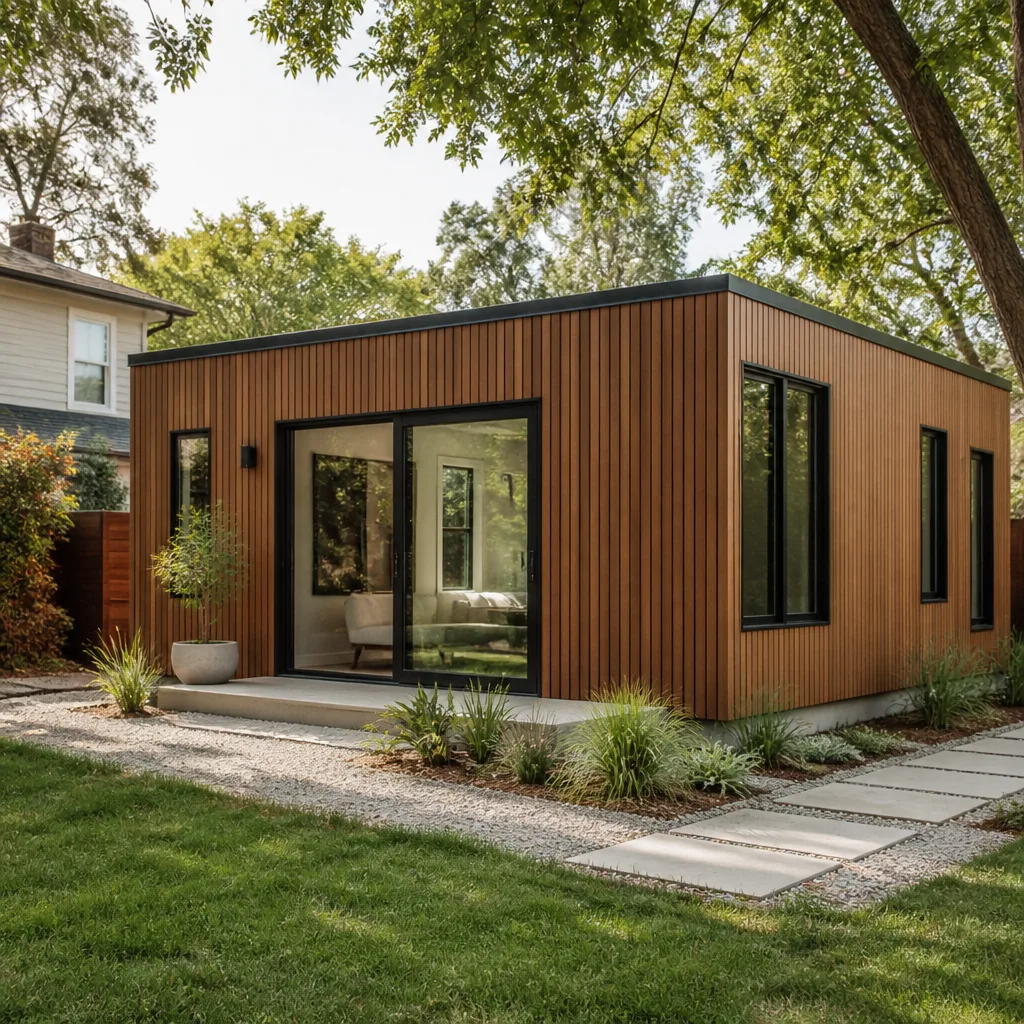
Abodu builds architect-designed units with a strong emphasis on finished design coherence. The company handles delivery and installation as part of its model, which means the module arrives closer to move-in condition than a panelized system does. For a Redmond lot with viable crane access, this shrinks the on-site construction window considerably. Customization leans toward a curated set of finish and layout choices rather than unlimited bespoke design, which is generally a benefit for timeline predictability and a limitation if you have very specific requirements.
Cover is known for a highly engineered, precision panelized approach where the unit is assembled on-site from factory-finished components. Because Cover ships panels rather than large modules, the delivery footprint can fit narrower sites where a full crane-set module might not, and the assembly is fast once panels reach the site. The trade-off is that site preparation and foundation work still need to be complete and accurately built to the manufacturer’s tolerances, because panel assembly leaves less room to adjust for a foundation that’s a fraction off. In Redmond, where soil conditions and slope vary lot to lot, that’s a point we discuss with every Cover client up front.
Dvele leans into high-performance construction and customization, with more room to tailor layout, finishes, and performance characteristics than a more product-like system. For a homeowner who wants prefab speed but a house that feels specifically theirs, Dvele usually lands closer to that middle ground. The trade-off is a longer factory lead time for anything customized, plus a design-approval sequence that needs to be sequenced correctly with Redmond’s permit process.
There’s no universal winner. We let clients compare ADU builders and prefab brands side by side under one roof, because the right choice depends on your lot, your timeline, and how much customization you actually want.
What “All-In” Pricing Actually Includes (and Excludes)
The word “all-in” causes more confusion in prefab ADU shopping than any other term. In practice, prefab pricing usually covers the unit itself, the factory-built finish package, delivery, and the manufacturer’s installation or assembly scope. It generally does not include site preparation, foundation, utility trenching, connection fees, permit fees, design and engineering beyond the base product, or any coordination with the existing house. Those items are substantial, and on a Redmond lot they commonly account for a large share of total project cost, very often in the neighborhood of a quarter to a third.
Here’s the approximate breakdown we walk clients through before any design work begins:
| Category | Typically Covered By | Typical Share of Total |
|---|---|---|
| ADU unit and factory finishes | Prefab brand or site-built package | Largest single line item |
| Foundation and site preparation | Site work contractor, regardless of delivery model | Roughly 25 – 35% of total when combined with utilities |
| Utility trenching and connections | Site work, regardless of delivery model | Part of the 25 – 35% above |
| Permits, design, engineering | Varies; often separate | Project-dependent |
| Crane and delivery logistics | Sometimes included, sometimes separate | Lot-dependent |
Two things are worth saying plainly. First, foundation and utility costs are largely identical whether you go prefab or site-built, because the work on the ground is the same work. Second, the “all-in” figure you see quoted for a prefab product is not the all-in figure for your Redmond project. The written estimate should itemize both, and the final price is set by that written estimate. Call (425) 699-9065 for an itemized, free estimate that separates product cost from site cost, so you’re comparing like for like.
Timeline Comparison: Factory Lead Time vs. Site-Built Construction
Timeline is where prefab’s case is strongest, but it isn’t as simple as “prefab is faster.” The two paths have different sequences, and the answer to which finishes sooner depends on when each sequence can start and where the bottlenecks fall.
- Prefab: factory lead time plus permit review. While the factory builds the unit, Redmond’s permit review proceeds in parallel. When both are complete, the unit arrives and on-site work moves quickly. Total elapsed time tends to be shorter because factory and permit timelines overlap.
- Site-built: permit plus full construction. Design and permit review come first, then framing, rough-in, insulation, and finish happen on site in sequence. Each trade has to wait for the one before it, and Redmond’s wetter months can affect exterior work.
- Where prefab wins: a straight timeline with a standard product, a clear delivery path, a buildable lot, and a Redmond site that is ready for the foundation when the factory is ready for delivery.
- Where prefab doesn’t: site access problems, slope, an unusual footprint, or customization that pushes the factory lead time out. In these cases the parallel timeline advantage narrows, and site-built can match or beat it.
- What determines the actual schedule: the written estimate. Prefab factory lead times vary by brand and configuration, and Redmond’s permit review depends on the completeness of the submittal and the specifics of the lot.
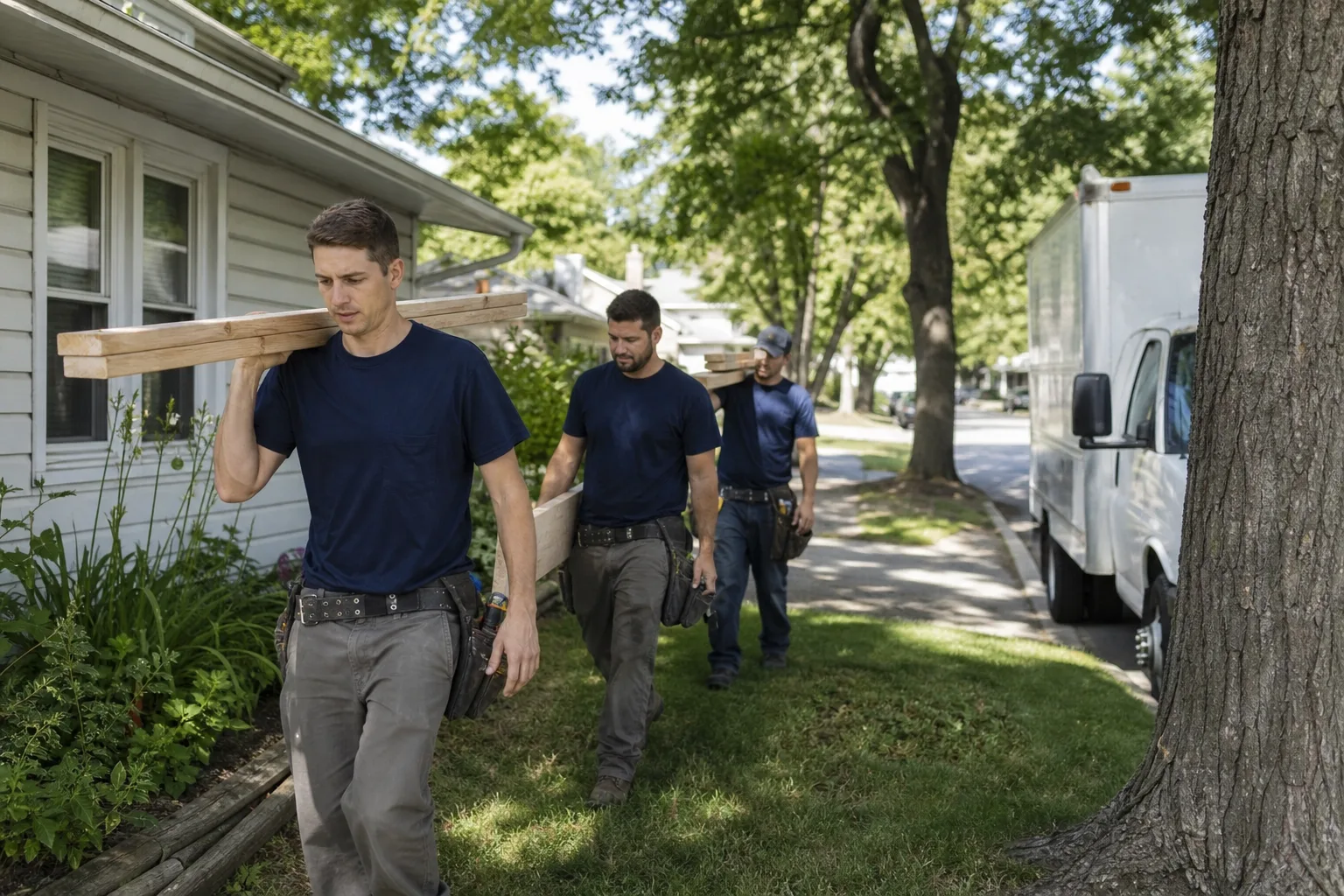
We plan the permit submission and the foundation work around the factory’s confirmed delivery window, so the site is ready when the unit is. That coordination is the piece most homeowners underestimate, and it’s the whole reason we brought design, permitting, and construction under one roof.
What Prefab Doesn’t Solve: Site Work, Utilities, and Foundation
Prefab moves the walls, roof, and finishes into a factory. Everything else still happens at your address. On a Redmond property, that “everything else” typically includes:
- Site survey and geotechnical review to establish grade, soil behavior, and what the foundation needs to look like for your lot.
- Foundation construction to the manufacturer’s specification. Cover’s panelized system in particular requires the foundation to meet tight tolerances.
- Utility trenching and connections from the main house or street to the ADU, plus any meter or service coordination the city requires for your site.
- Drainage and grading so water moves away from both the ADU and the existing home. Redmond’s wet winters make this a priority, not a formality.
- Landscaping restoration for whatever the delivery and construction disturbed.
None of these costs disappear when you choose prefab. They are real, often substantial, and they’re why prefab rarely comes out dramatically cheaper than site-built for a similar finished product. What prefab does change is timing: site work and factory work can run at the same time, so total elapsed time is shorter. That’s a predictability gain, not a price gain. If you’re ready for an itemized estimate on your Redmond lot, call (425) 699-9065.
Where Site-Built Still Has a Real Advantage
Prefab has a design ceiling, and there are Redmond situations where that ceiling matters enough that site-built is the right call. We say this as an ADU-only specialist who works with Abodu, Cover, and Dvele: recommending site-built when a prefab product is the wrong fit is part of doing the job honestly.
Site-built wins in these situations:
- Unusual lot shapes or slopes. A narrow, irregular, or steeply graded lot often resists a standardized footprint. Framing on location can follow the topography instead of fighting it.
- Complex integration with the existing home. If the ADU needs to share a wall, roofline, or mechanical system with the main house, the coordination required usually favors site-built.
- Specific finish standards or architectural requirements. Homeowners with exact finish specifications, or whose existing home has an architectural character to match, get more control from site-built construction.
- Structural or seismic requirements. When a site introduces structural complexity that a standardized system can’t absorb, custom engineering and site-built framing give more room to solve it.
- Larger or more complex ADUs. The larger the unit and the more complex the layout, the more likely site-built is the practical option.
What we do is present both paths with numbers, not opinions. A garage conversion may do everything you actually wanted. A prefab may get you to move-in faster on the right lot. Site-built may deliver the exact finish standard you’re after. All three are legitimate, and the right answer is the one your lot and budget actually support.
Prefab Site Feasibility Checklist for Redmond Properties
Before you pick a brand, walk your property against this checklist. It’s the same one we use during a site review.
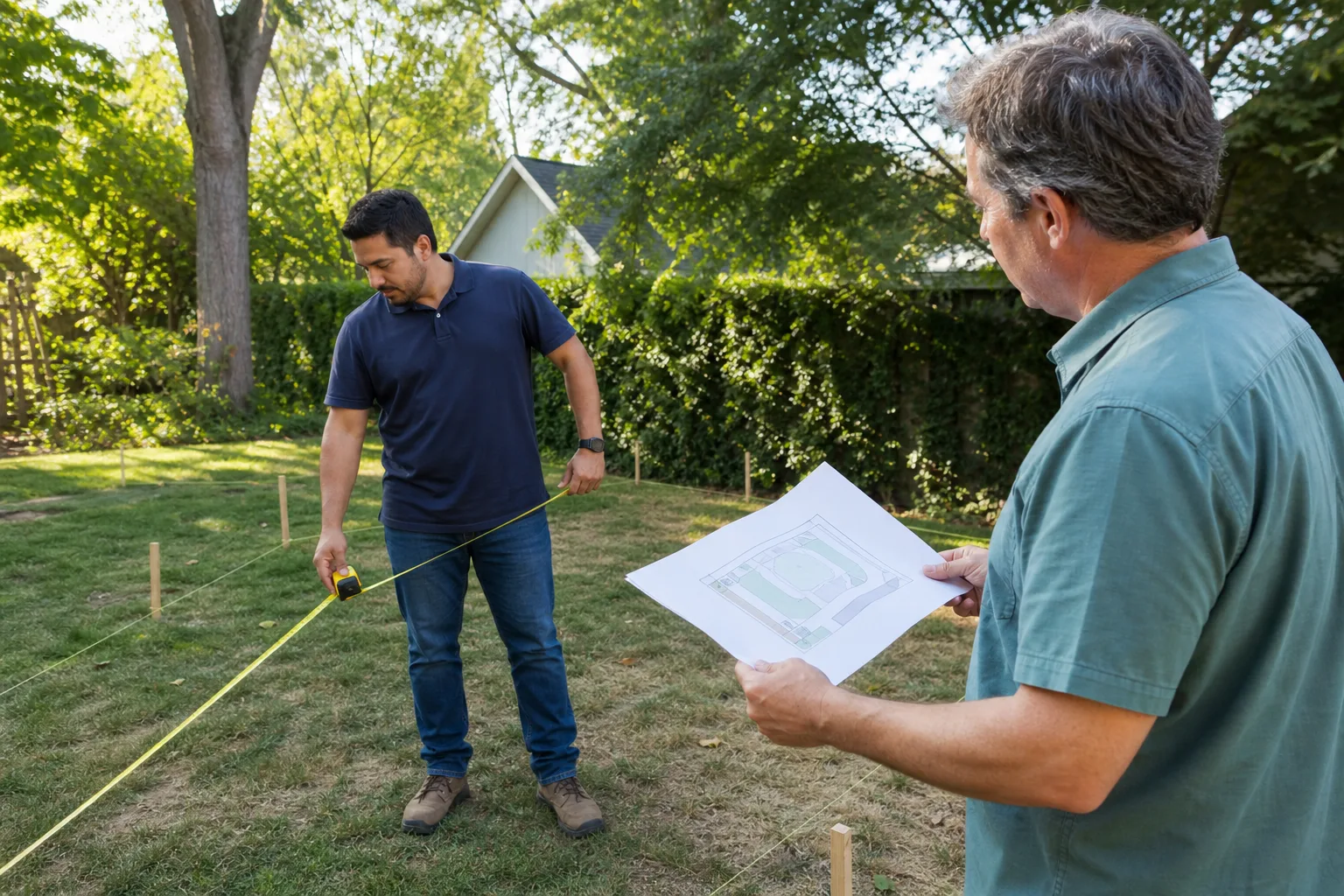
- Confirm the delivery route. Identify where a truck or crane would park and how it would reach the placement site. Include the alley or driveway, not just the street.
- Check overhead clearance. Look up. Overhead utility lines along the delivery path are the most common reason prefab gets ruled out.
- Locate all utility easements. A recorded easement across the only viable delivery corridor changes what’s possible. Your title report and the city’s mapping will show them.
- Measure access width. Narrow side yards between structures can be a hard limit. Bring a tape measure and write the numbers down.
- Identify mature trees near the path. Even trees you don’t plan to touch can be protected. The city’s planning department confirms what applies to your lot.
- Establish your slope. Compare it against the foundation tolerance of each brand you’re considering. Abodu, Cover, and Dvele all specify maximum grades.
- Confirm your foundation option. Each brand supports specific foundation types. Verify the one you want matches the one your lot actually needs.
- Verify zoning and setback rules with the city. ADU lot coverage, setback, and height rules are specific to Redmond and to your parcel. We confirm them with the city’s planning or building department before plans are final.
- Get an itemized estimate that separates product cost from site work. If a quote doesn’t break these out, you can’t compare it to anything.
If a junior ADU fits your plans and lot, that can be a lower-cost entry point that sidesteps some of the access questions a full prefab lift raises. Either way, the checklist above gives you the information you need to make an informed comparison instead of a guess.
Garage Conversions and JADUs as Entry Points
Not every Redmond homeowner who wants an ADU needs a standalone structure. Two lower-cost, lower-complexity paths are worth considering before you commit to a prefab purchase: garage conversions and junior ADUs. A garage conversion takes space you already own and turns it into finished, rentable or family-use living space, avoiding foundation and delivery logistics entirely. A JADU occupies a portion of the existing home, which usually means fewer site work costs. Both can be a smart first step if your main goal is income, multigenerational space, or long-term property value without a full ground-up build. We outline each pathway with a written estimate so you can compare against the prefab options and make the call that’s right for your Redmond property.
Common Mistakes to Avoid
- Assuming prefab is automatically cheaper. Foundation, utility, and site work are largely the same whether the unit arrives by crane or gets framed on location. Those shared costs are frequently a quarter to a third of the project.
- Picking a brand before you’ve surveyed your lot. Site access, overhead clearance, easements, and slope determine which brands are even viable. Brand-first shopping wastes time and money.
- Accepting an “all-in” quote that excludes site work. Prefab’s quoted “all-in” price is almost never the all-in price for your Redmond property. Always ask for line-item separation.
- Skipping the tree assessment. Redmond’s mature trees can restrict the delivery path and placement far more than people expect. Have it reviewed before you sign a purchase agreement.
- Ordering a factory unit before the site is ready. If the foundation isn’t ready when the factory is ready for delivery, you can end up paying for storage or delaying the sequence that made prefab faster in the first place.
- Coordinating permit submission and factory lead time as separate tasks. Prefab’s timeline advantage depends on overlapping these. If your builder or brand doesn’t overlap them, the advantage disappears.
- Assuming a first quote is the final answer. Redmond market pricing varies significantly by lot and brand. A written estimate with line-item detail is the only real basis for comparison.
When to Call a Professional
Give us a call if any of these apply to your Redmond property. You’ve identified a delivery path but aren’t sure whether it meets overhead utility clearance or easement rules. You’re weighing prefab brands Abodu, Cover, and Dvele against site-built and want a side-by-side comparison from one contractor. You aren’t sure whether a prefab, site-built, garage conversion, or JADU is the right fit for your lot. Or you’ve already been quoted by a prefab brand and you want to understand what the quote excludes for your specific site. ADU Builder Redmond offers free estimates in Redmond: call (425) 699-9065. We answer 24/7. Fast dispatch from 7am to 7pm, Sunday through Friday.
Frequently Asked Questions
Usually not by much. Prefab typically changes the timeline, not the total project cost, because foundation, utility, and site work costs are largely the same either path. Prefab’s real advantage is parallel scheduling: the factory builds while Redmond’s permit review proceeds. Call (425) 699-9065 for an itemized estimate on your lot: estimates are free.
That depends on your specific site. Delivery requires a clear parking spot for the crane truck, overhead utility clearance, a delivery path that doesn’t cross a recorded easement, and no interference with protected tree root zones. We do a free site review that walks this exact path with you. Call (425) 699-9065 to schedule yours.
Abodu delivers a finished, architect-designed module closer to move-in condition. Cover ships precision panels that assemble on site, which can work on narrower lots but needs a foundation built to tight tolerance. Dvele leans toward high-performance customization with a longer factory lead time for customized builds. We work with all three so you can compare them against each other and against site-built under one roof. Call (425) 699-9065 for a comparison on your lot.
Site work and utility connections are the most commonly underestimated costs, and they’re the same either way. Foundation, trenching, drainage, and landscaping restoration are frequently a quarter to a third of total project cost, and they don’t appear in most prefab brand quotes. We itemize these in every written estimate. Call (425) 699-9065 for yours.
Prefab ADUs are allowed under Redmond’s ADU rules, subject to the same zoning, setback, and lot coverage requirements as site-built units. The specific rules vary by parcel and by lot, and we confirm them with the city’s planning or building department before plans are final. Call (425) 699-9065 to start the conversation.
Then we build it on site. Site-built construction has real advantages for unusual lots, steep slopes, strict finish standards, or complex integration with the existing home, and it remains a fully available option through us. We don’t force a prefab product that doesn’t fit the property. Call (425) 699-9065 to schedule a free site review.
The Bottom Line
The prefab vs. site-built decision in Redmond is settled first by site access and second by design ambition. If a crane truck can reach your rear yard without crossing an easement or disturbing a protected tree root zone, and your slope sits within the brand’s foundation tolerance, prefab from Abodu, Cover, or Dvele delivers a faster, more predictable project on a Redmond lot. If your site is tight, irregular, or needs a specific finish standard, site-built remains the better path. Either way, the foundation, utilities, and site work costs are largely the same, so choose your delivery method based on delivery logistics and design, not on the assumption that prefab is cheaper. And if you’re not sure which side of the line your property falls on, have us walk it with you before you commit.
Call (425) 699-9065 for a free estimate. We answer 24/7. Fast dispatch from 7am to 7pm, Sunday through Friday.
Written by the team at ADU Builder Redmond.